
We make exactly one product: crude avocado oil.
No extra virgin, no refined edible oil, no retail bottling. Teka Products Limited mechanically extracts Kenyan avocados into 100% unrefined crude oil and ships it in bulk to industrial buyers who refine it further.
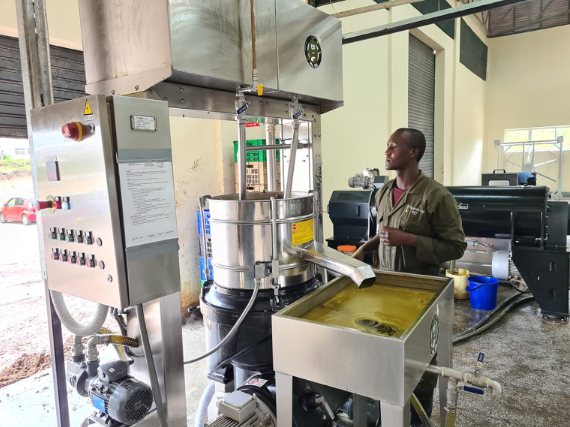
Unrefined crude avocado oil — nothing else
Our single product is 100% unrefined crude avocado oil, mechanically extracted from ripe Hass and Fuerte fruit. It's deep green, unfiltered of its natural waxes and pigments, and sold strictly as an industrial feedstock — never as a consumer or edible-grade product straight off our line.
Buyers take it from there: international refiners in Italy, the EU, the US and Asia run it through their own refining, bleaching and deodorizing (RBD) processes to produce the neutral, shelf-stable oils used in cosmetics, personal care formulation, nutraceuticals and specialty food applications.
| Product form | Unrefined crude avocado oil |
|---|---|
| Fruit varieties | Hass and Fuerte |
| Extraction method | Malaxation & centrifugal decanting (no solvents, <45°C) |
| Typical yield | 10–14% oil by mass, from 21–23% dry matter fruit |
| Sold as | Bulk industrial feedstock only — not edible or retail-grade |
Nine stages, one continuous extraction line
Our line runs at 7 tonnes of raw fruit per hour, taking fruit through to finished unrefined crude oil in a single continuous pass. Tap any stage to see what happens inside it.
1
Fruit Reception, Weighing & Quality Inspection
Every delivery is weighed on a calibrated scale and inspected before a single fruit enters the line.
Fruit Reception, Weighing & Quality Inspection
Every delivery is weighed on a calibrated scale and inspected before a single fruit enters the line.
Mature avocados arrive at the facility in field crates, bins or bulk containers. Each incoming batch is weighed on a calibrated weighbridge or platform scale to establish raw-material input and support production and yield monitoring.
At reception, fruit is inspected for:
- Variety and maturity
- Physical damage and bruising
- Rot, fungal infection and excessive deterioration
- Foreign material — stones, leaves, branches, soil
- Excessively immature or overripe fruit
- Visible pesticide or chemical contamination, where applicable
Severely deteriorated or contaminated fruit is removed before processing, and accepted fruit is conveyed straight to the washing section.
2
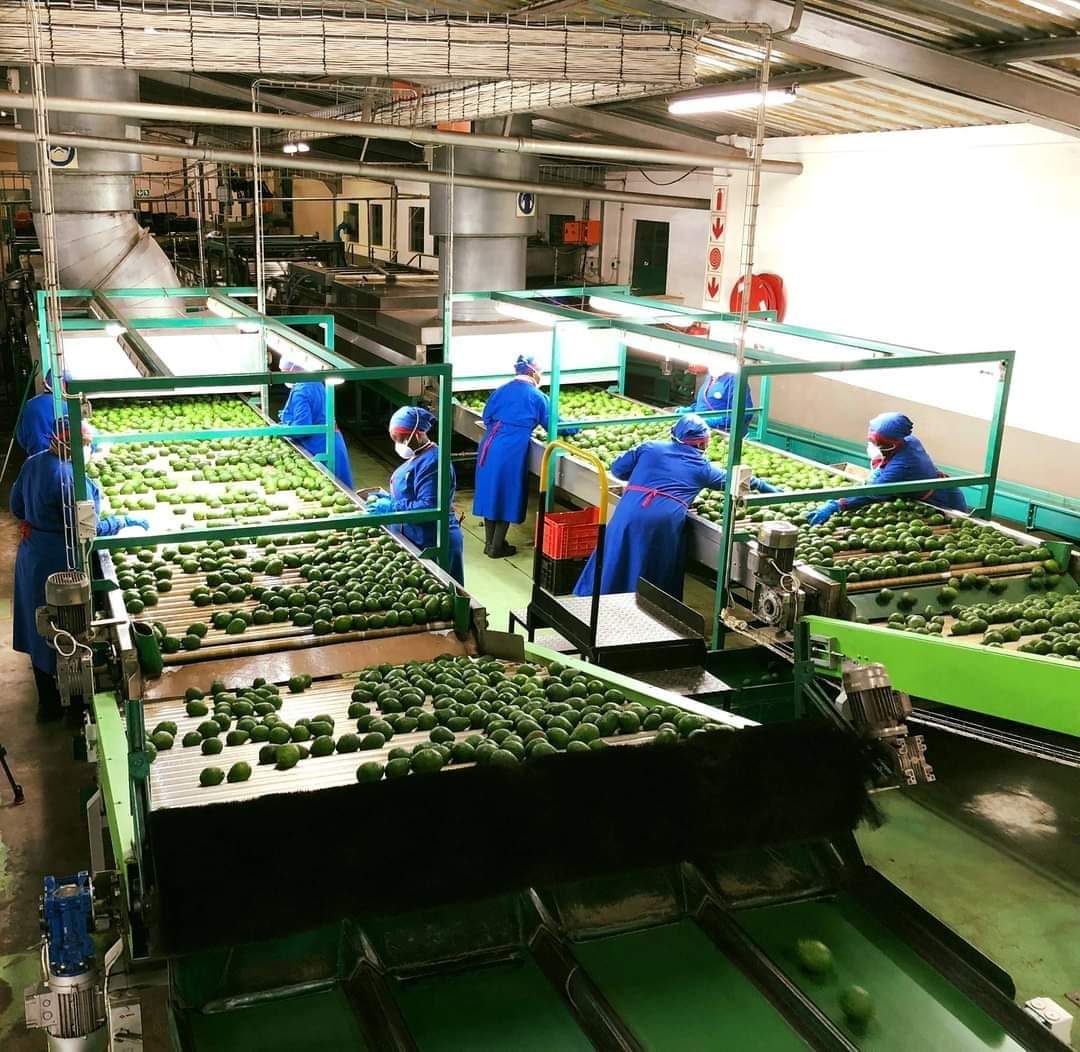
Fruit Washing & Cleaning
An automated wash line strips soil, dust, leaves and stems from the fruit surface.
Fruit Washing & Cleaning
An automated wash line strips soil, dust, leaves and stems from the fruit surface.
Avocados pass through an automated washing system designed to remove soil, dust, leaves, stems and other surface contaminants. Depending on the configuration, the line incorporates:
- Dry pre-cleaning or vibrating screens to shed loose debris
- Water spraying or immersion washing
- Rotating brushes to lift adhering soil
- A final clean-water rinse
- Draining or air drying before further processing
Water consumption is minimised through controlled spray pressure, recirculation, filtration and scheduled replacement of wash water.
3
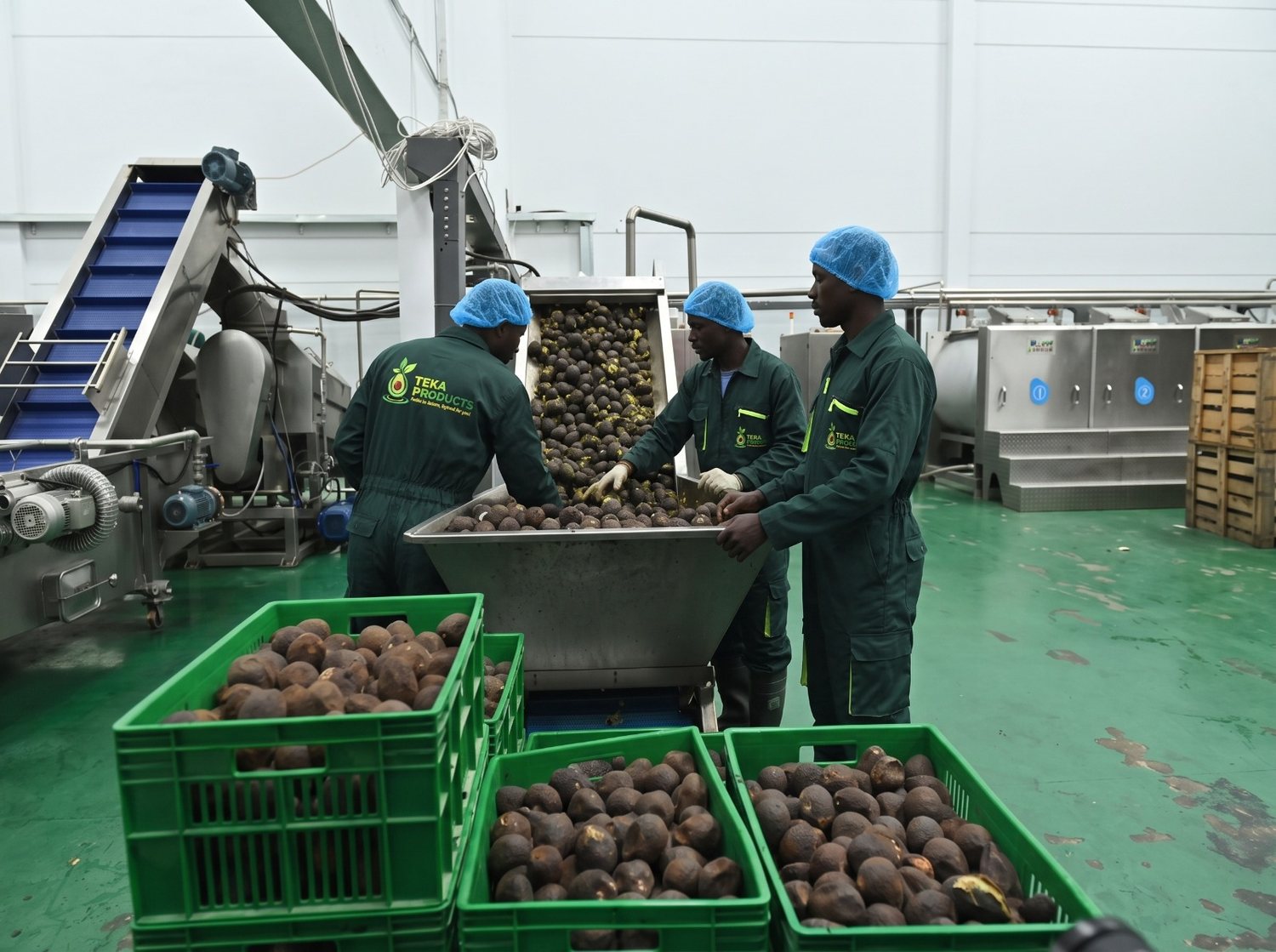
De-stoning, Skin Separation & Pulp Preparation
Fruit is crushed and de-pulped into a uniform paste, with pits and skins pulled out as a by-product stream.
De-stoning, Skin Separation & Pulp Preparation
Fruit is crushed and de-pulped into a uniform paste, with pits and skins pulled out as a by-product stream.
Clean fruit is fed into a mechanical preparation system where it is crushed or de-pulped. Depending on equipment configuration the process includes fruit crushing, pit and seed separation, partial skin separation, and pulp refining or milling.
The objective is a homogeneous avocado pulp with as much hard pit material and undesirable fibre removed as is practical. The flesh is then milled into a uniform paste.
Pits and separated skins form an important solid by-product stream, which can be directed toward biomass fuel production, composting, anaerobic digestion or other approved valorization routes.
4
Controlled Malaxation
Gentle agitation for 30–60 minutes, held below roughly 45°C, coalesces oil droplets ahead of separation.
Controlled Malaxation
Gentle agitation for 30–60 minutes, held below roughly 45°C, coalesces oil droplets ahead of separation.
The prepared pulp is transferred into temperature-controlled malaxation tanks — the critical stage in mechanical oil extraction. The pulp is gently agitated for approximately 30–60 minutes, with process temperature normally controlled below about 45°C to keep the oil minimally processed.
Mechanical agitation disrupts the remaining cellular structures and encourages small oil droplets to coalesce into larger ones, which are far easier to recover during centrifugal separation. The malaxer provides:
- Controlled residence time
- Gentle, uniform agitation
- Continuous temperature monitoring
- Minimal exposure to air where practical
- Hygienic stainless-steel construction
- Easy cleaning and drainage
5
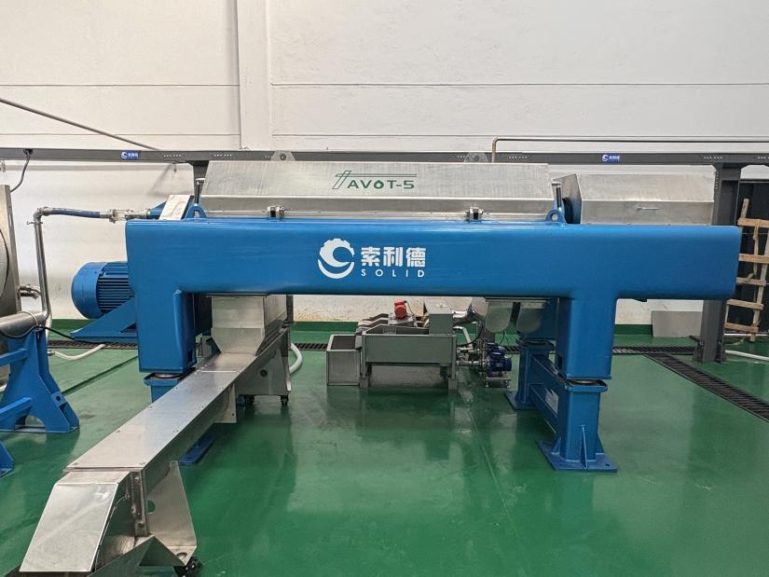
Decanter Centrifugation
A horizontal decanter separates the conditioned paste into oil, water and solids by density.
Decanter Centrifugation
A horizontal decanter separates the conditioned paste into oil, water and solids by density.
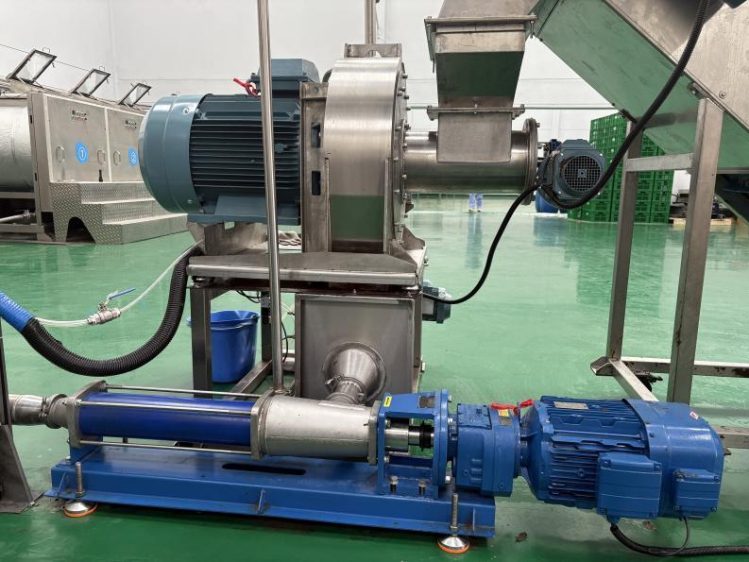
After malaxation, the conditioned paste is pumped continuously into a horizontal decanter centrifuge, where high centrifugal force separates the density fractions. The system can operate in a 2-phase or 3-phase configuration.
- 2-phase: crude avocado oil, plus a wet solid/liquid residue containing pulp solids and process water — generating less wastewater than a conventional 3-phase system.
- 3-phase: crude avocado oil, an aqueous phase (vegetable/process water), and solid pulp or pomace.
Operating parameters — differential speed, feed rate, pond depth, torque and centrifugal force — are tuned for maximum oil recovery while holding acceptable clarity and minimising oil losses to the solid and aqueous streams.
6
Centrifugal Polishing & Clarification
A high-speed disc-stack separator removes fine solids and residual water without chemical refining.
Centrifugal Polishing & Clarification
A high-speed disc-stack separator removes fine solids and residual water without chemical refining.
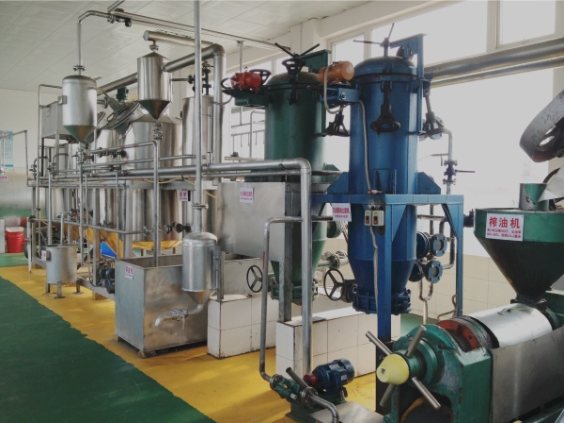
Crude oil leaving the decanter may still carry fine pulp particles, suspended solids, residual water and fine colloidal material. It is therefore passed through a high-speed disc-stack centrifuge or centrifugal separator, which removes residual fine solids and free water through controlled centrifugal separation.
Where required, the oil then passes through suitable food-grade filtration equipment, using progressively finer filter media depending on the final specification agreed with the buyer.
7
Quality Control & Testing
Representative samples are tested against the buyer's specification before any oil is released.
Quality Control & Testing
Representative samples are tested against the buyer's specification before any oil is released.
Before bulk storage and shipment, representative samples are collected and tested against the agreed buyer specification and applicable food and oil standards. Typical parameters include:
- Free fatty acids (FFA) and acid value
- Peroxide value
- Moisture and volatile matter
- Insoluble impurities
- Oil colour, odour and sensory characteristics
- Density and fatty-acid profile
- Oxidative stability, where required
- Trace metals, where relevant
- Microbiological parameters, where applicable
- Pesticide-residue compliance for the destination market
8
Crude Oil Storage
Clarified oil is held in closed, food-grade tanks under controlled conditions until loading.
Crude Oil Storage
Clarified oil is held in closed, food-grade tanks under controlled conditions until loading.
The clarified unrefined avocado oil is transferred into clean, food-grade storage tanks, which are:
- Stainless steel or otherwise food-contact compliant
- Closed and protected from contamination
- Fitted with appropriate temperature monitoring
- Designed for effective cleaning and drainage
- Shielded from excessive heat and direct sunlight
Because avocado oil is susceptible to oxidation, exposure to oxygen, heat, light and contaminants is kept to a minimum. Where commercially and technically justified, tanks may be fitted with inert-gas blanketing to reduce oxygen exposure.
9
Bulk Loading & Flexitank Shipment
Oil is metered into food-grade flexitanks inside ISO containers, with full batch documentation.
Bulk Loading & Flexitank Shipment
Oil is metered into food-grade flexitanks inside ISO containers, with full batch documentation.
For international bulk transport, finished crude avocado oil is loaded into food-grade flexitanks installed inside suitable shipping containers, where the oil specification, shipping conditions and logistics provider permit. Before loading:
- The flexitank and container are inspected for cleanliness and integrity
- The oil is verified against the approved batch specification
- Loading temperature is controlled for safe pumping without unnecessarily heating the oil
- Quantity loaded is measured using calibrated weighing or flow-metering equipment
- Samples are retained for traceability
- The shipment is documented with batch number, production date, quantity, quality certificate and all required export documentation
Waste management & by-product valorization
Extraction leaves behind pits, skins, fibrous pomace, oily residues and process wastewater. Rather than treating these as pure waste, we route each stream toward recovery — energy, compost, feed material or clean water — reducing disposal costs and our dependence on external fuel and fertilizer.
Bio-Briquetting & Biomass Fuel
Pits, skins and dry solid residues are dried, milled and compressed into briquettes for boiler and process-heat use — cutting reliance on external fuel for the plant's thermal-energy demand.
Organic Composting
Pomace, skin residues and rejected fruit go through controlled aerobic composting, blended with carbon-rich material, and matured into compost that's returned to avocado farms as a soil amendment.
Anaerobic Digestion & Biogas
High-organic wastewater and wet residues are directed to anaerobic digestion, where microorganisms produce biogas for process heating and a stabilized digestate for agricultural use.
Animal Feed from De-Oiled Pomace
De-oiled pomace retains fiber and residual nutrients. Where it meets nutritional, microbiological and regulatory requirements, it's dried, milled and tested for use as an animal-feed ingredient.
Wastewater Treatment & Reuse
Wash and process water passes through screening, oil/grease separation, and biological treatment. Where suitable, treated water is reused for non-product-contact tasks like equipment pre-washing and floor washing.
What the environmental management system covers
- Solid-waste segregation at source
- Wastewater and discharge monitoring
- Odour and noise management
- Boiler-emission management
- Safe biomass storage, fire prevention & suppression
- Chemical and cleaning-agent management
- Pest control and spill prevention
- Worker hygiene and food safety
- Traceability of raw materials and finished oil
- Preventive maintenance, energy & water monitoring
Fruit from Central Kenya, year-round
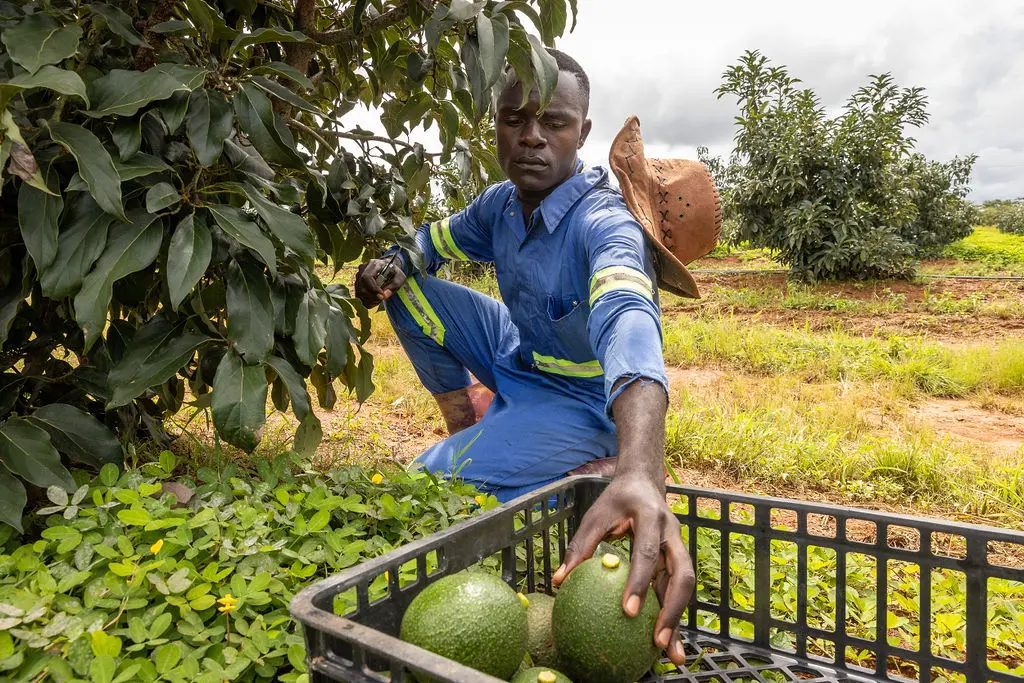
Kenya's avocado harvest peaks from April to November, and that's when most of our fruit comes directly from outgrower networks across Kiambu, Murang'a, Nyeri, Kirinyaga, Embu, Meru and Kisii.
During Kenya's off-peak months (December–March), we maintain continuity through cross-border sourcing from Tanzania and Uganda under East African Community trade protocols — so the line keeps running and export commitments stay on schedule.
- ✓ Direct farm-gate procurement, no exclusivity lock-in for farmers
- ✓ Dry matter testing on every incoming truck (21–23% minimum)
- ✓ A market for Class 2/3 fruit rejected by fresh-export buyers
Tested before it's trusted
Every truckload is verified before it enters the line — and every batch of oil is checked before it's approved for export.
Dry Matter Testing
Destructive sampling on every incoming consignment, requiring a minimum 21–23% dry matter content.
Oil Recovery Yield
A target minimum of 11% net oil yield per tonne of raw fruit, tracked as a core plant KPI.
Export-Grade Specs
FFA levels, peroxide value and moisture content standardized to meet international buyer requirements.
22,500-litre flexitanks, every shipment
We don't ship in drums or small containers. Finished crude oil is pumped directly from our bulk storage tanks into heavy-duty, multi-layer food-grade flexitank bladders — each holding roughly 20.7 metric tonnes of oil inside a standard 20-foot ISO ocean container.
| Packaging format | 22,500L multi-layer PE/PP flexitank bladder |
|---|---|
| Freight carrier | Standard 20-foot ISO dry ocean container |
| Export port | Mombasa, via the Nairobi–Mombasa corridor |
| Destination markets | Italy, EU, United States, Asia |